 1800 156 455
Why Use Timber in Ceiling in Design
Why Use Timber in Ceiling in Design
Did you know that timber insulates 1,500 times better than aluminium? Or that having natural wood in a space can help lower anxiety?
In fact, there’s a whole host of benefits that come with timber, particularly timber ceilings, that many people don’t realise.
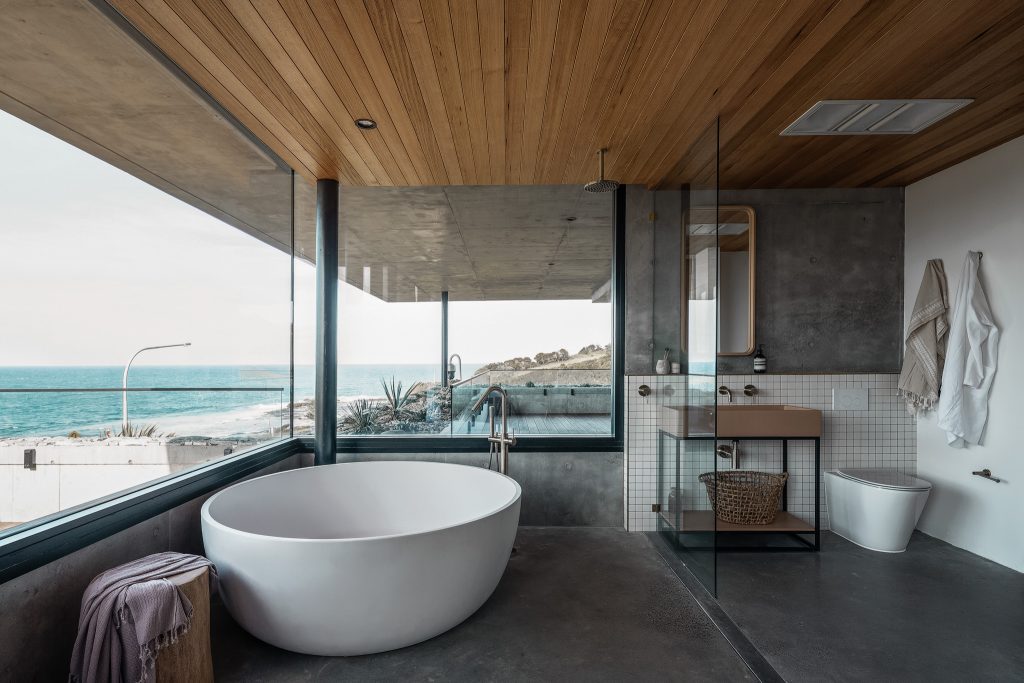
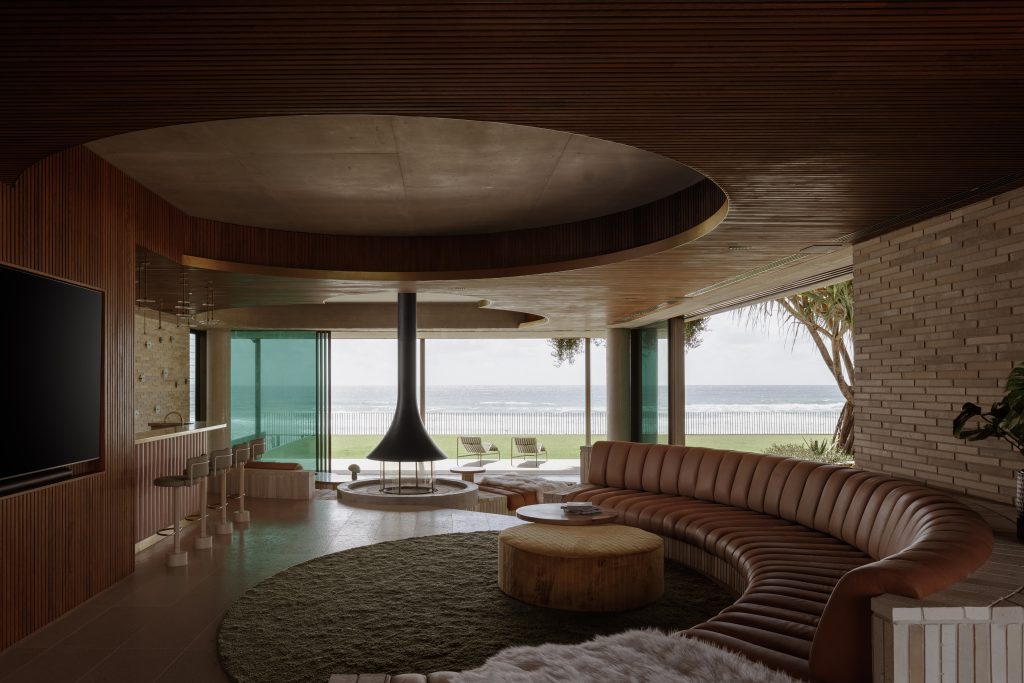
A timber ceiling is an incredibly versatile material that can revolutionise any space, from industrial buildings to country homes.
Timber Ceiling Basics
Choosing the right timber for your ceiling
Every timber has its own character. Cedar is a favourite for its rich look and natural aroma, but it’s soft, so it marks and dents easily — worth keeping in mind in high-traffic areas. Oak sits at the premium end: it’s dense, durable, and built to last, which is part of why it costs more than other options.
Ceiling patterns to consider
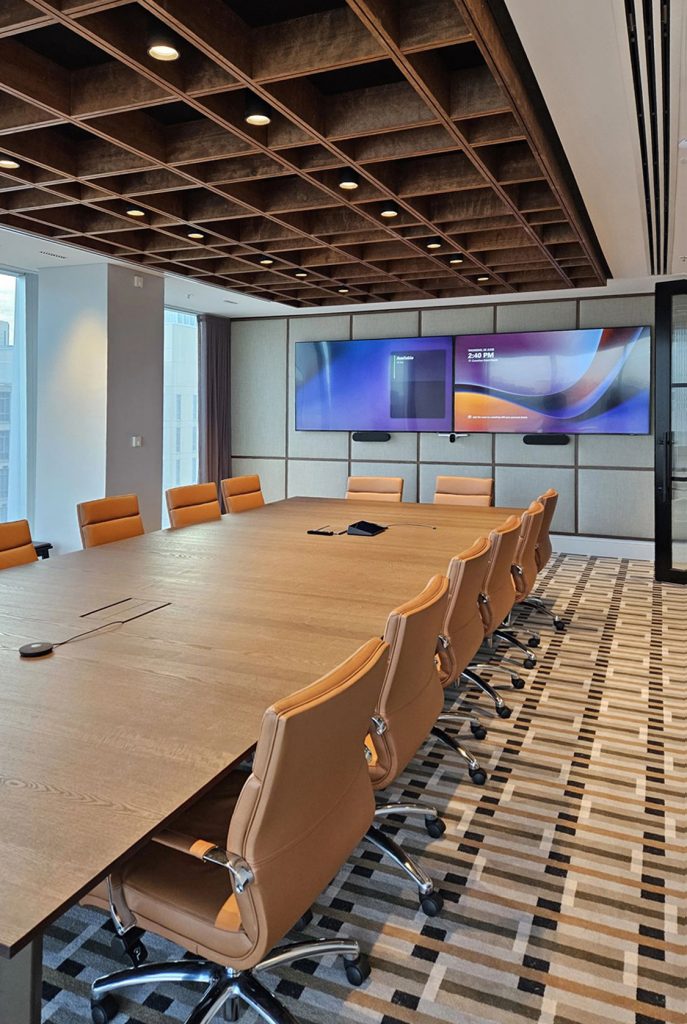
There’s no shortage of ways to style a timber ceiling. Tongue and groove panelling is a classic style where the boards lock together for a clean, seamless finish. Coffered ceilings bring a more elevated, architectural feel with recessed panels framed by beams. For something more contemporary, geometric patterns with repeating triangles or squares are increasingly popular.
What affects the price
Timber ceiling costs can vary quite a bit, and a few factors drive that:
– The type of timber you pick (American White Oak costs the most)
– What finish you want (from natural oil to fire-resistant coatings)
– How big the battens are and how far apart they go
– How tricky it is to install
Random-length boards (1.2m–4.2m) are generally more budget-friendly than fixed lengths, and larger projects tend to cost less per square metre since the setup and installation time works out more efficiently at scale.
Popular Timber Ceiling Styles
Timber ceilings have become amazing architectural elements that combine beauty with practical use.
Modern timber batten designs
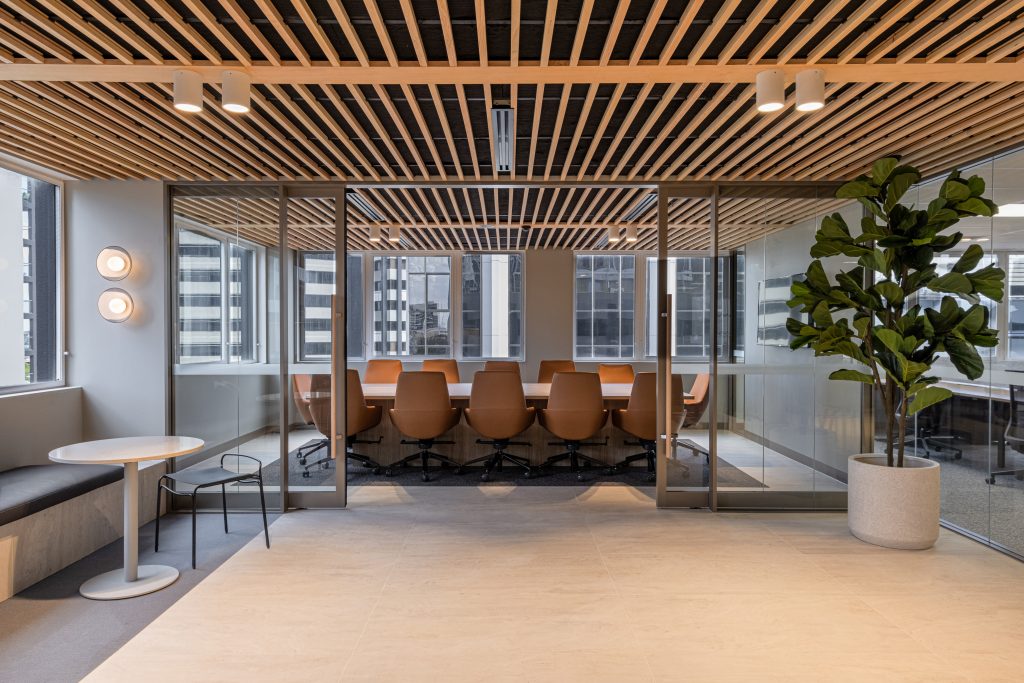
Timber batten systems are a versatile choice that comes with adjustable mounting tracks and spring steel clips to control spacing precisely. These systems work great in bigger residential and commercial projects and come with fire-resistant coating options for indoor use.
Classic panelled looks
Tongue-and-groove panelling remains a classic choice that adds refined beauty to modern and traditional spaces.
Contemporary patterns
Modern ceiling designs now feature state-of-the-art geometric patterns, as shown in the Gateway Shopping Centre project. We used a custom curve plywood to create an eye-catching tree trunk and tree top architectural design. These designs work perfectly in spaces that need both visual appeal and practical installation options.
Benefits of Timber Ceilings
Acoustic advantages
Timber’s cellular structure makes it excellent at absorbing sound because it can trap and dissipate sound waves through its natural air pockets.
Timber ceilings with acoustic backing panels can cut down echo and reverberation. A timber ceiling system paired with good acoustic design can achieve noise reduction coefficients (NRCs) up to 0.9,
making them an excellent choice for offices, lecture halls and auditoriums.
Temperature control
Timber’s natural insulation properties are great for regulating indoor temperatures effectively.
Softwood is particularly good at this, insulating 10 times better than concrete and masonry and 400 times better than solid steel.
This feature helps keep room temperatures steady all year round.
Energy efficiency gains
Studies have shown that a timber ceiling can help you cut heating costs by up to 45% through better insulation.
Timber’s low thermal conductivity ranges from 0.12 to 0.14 W/m°C for softwoods.
This will give minimal heat transfer between spaces and reduce the need for artificial heating and cooling systems.
Planning Your Timber Ceiling Project
Are you planning on installing a timber ceiling? The success of your project depends on having the correct measurements and selecting the right finish.
You will need a structured way to measure your space accurately. We recommend:
– Calculating all measurements in feet
– Multiplying length by width for flat ceilings
– Adding 10-15% for waste allowance
– Accounting for trigonometric calculations for vaulted ceilings
A clear oil coating that creates a protective layer by penetrating the timber surface and allows natural ageing is always a smart option.
For exterior applications, these coatings need reapplication every 12-18 months.
Water-based alternatives work great for interior applications with a matte finish (5% gloss).
Timber Ceilings Made Easy
Austratus, our patent-pending clip-in system, makes timber ceiling installations easier than ever before.
Forget the long and awkward processes of the past. With our new clip-in system, your timber ceiling can be fitted and installed in as little as a few days.
We manufacture and ship all the parts together as one system, meaning you don’t have to worry about sourcing parts from multiple suppliers.
If you’re interested in discovering more about our timber ceilings range, or any of our other products, contact us today to speak with a professional.
We will be able to help you assess your options and determine the best species of timber and profile.
Article By Joel Leitch | 19 December 2025

Joel Leitch
Project Consultant
Joel is an integral team member of NSW projects division with over a decade as a consultant to architects and builders. With extensive experience as a head of projects, Joel Leitch combines deep knowledge of natural timber, aluminium, and concrete to provide innovative and inspiring design solutions.
