 1800 156 455
What is Shou Sugi Ban? A Complete Guide to Japanese Wood Charring
What is Shou Sugi Ban? A Complete Guide to Japanese Wood Charring
Shou Sugi Ban is a fascinating wood treatment technique from 18th century Japan that makes timber resistant to fire, water, pests, and harmful UV rays.
The term Shou Sugi Ban translates to “charred cedar board,” and it’s made a strong comeback in modern design worldwide. Western designers love its unique look and practical benefits.
But what is Shou Sugi Ban? It can be sold under lots of different names and styles, so it may be confusing to sort through your options.
In this article, we’ll learn more about Shou Sugi Ban, its use, and why it’s an excellent choice for any project.
The History and Origins of Shou Sugi Ban
The story of Shou Sugi Ban started with farmers in the 18th century who needed a practical way to protect their wooden homes, rather than improve their looks. They found that charring the wood surfaces made their homes incredibly strong against bad weather and bugs. The technique became refined over time, and people used it mostly for exterior cladding where resources were hard to come by.
Nobody knows exactly when it all began. University of Tokyo researchers found the first written mention in a 1930 dictionary. But old buildings and stories from the Edo period (1603-1867) hint at much earlier beginnings.
Before the 1970s, people saw charred timber as a poor man’s building material. Cheaper plastics and synthetic materials pushed it out of favour. But Shou Sugi Ban made an amazing comeback. Mills started specialising in making charred timber on a large scale. Prominent architects like Terunobu Fujimori and Yoshifumi Nakamura have helped bring this ancient technique back to life in Japan and around the world.

What is Shou Sugi Ban?
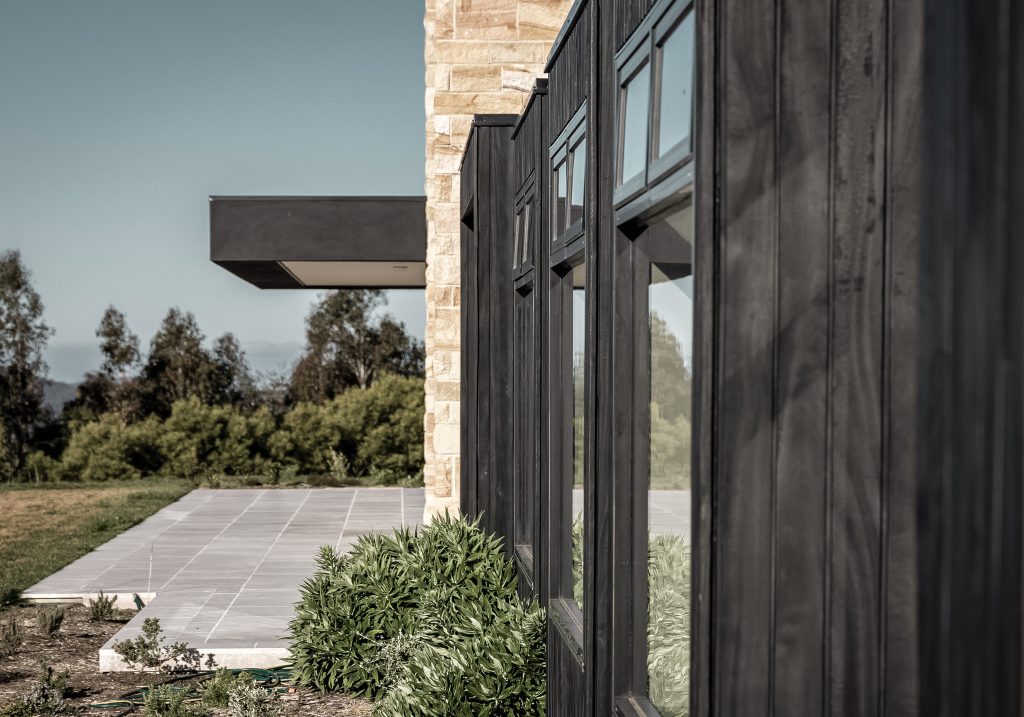
Shou Sugi Ban (sometimes called Yakisugi) is a Japanese technique that preserves wood by charring the surface.
This creates a 2-3mm layer of carbon that strengthens the timber and protects the unburnt core from fire, moisture, pests and rot.
The challenge with Shou Sugi Ban is creating a layer of char without combusting the wood or causing it to warp and crack. This requires careful temperature monitoring throughout the charring process.
These days, we use industrial equipment to evenly char our Shou Sugi Ban cladding. Our machinery prevents damage to the timber while providing a uniform finish that allows you to achieve any architectural design you have in mind!
How Shou Sugi Ban Works: The Process Explained
Shou Sugi Ban’s distinctive burnt wood finish comes from a remarkable sequence of events. This ancient technique requires controlled burning, cooling, brushing, and sealing that turns regular timber into a weatherproof material.
Japanese craftsmen have a unique approach. They bind three cedar boards into a triangle to create a chimney effect. The chimney design helps the fire spread faster inside. The process needs temperatures of at least 250°C, though it often reaches beyond 400°C. Charring time changes based on the wood’s original moisture and desired burn level. The outer 3-4mm usually takes about 5 minutes to char.
The timber’s moisture content should be around 10-15% before burning. Craftsmen open the triangle and put out the fire with water once they achieve the right char level.
Modern woodworkers prefer propane torches over the triangle method. This gives them better flame control and more consistent results. The next step uses wire brushes or coarse sandpaper to remove the charred surface layer after the wood cools.
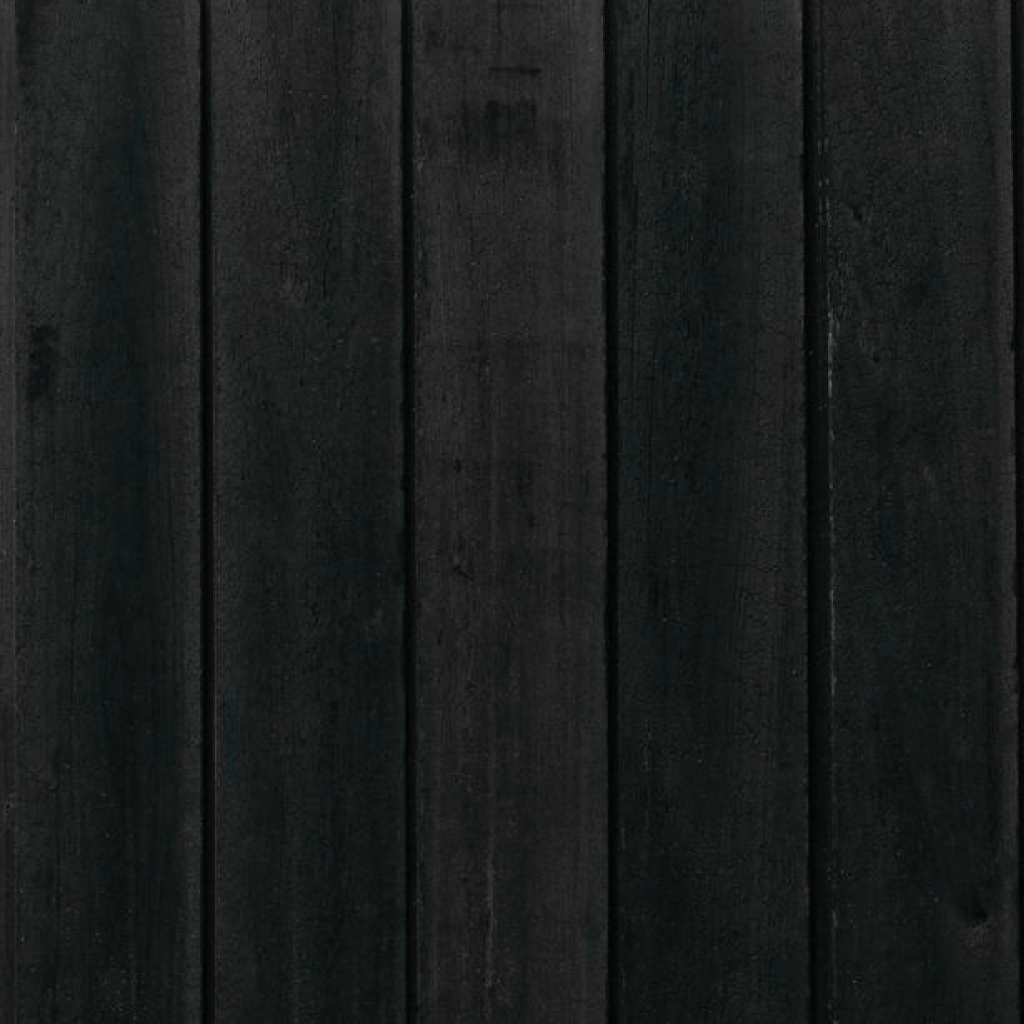
The final look and texture depends on the brushing intensity. Light brushing creates what Japanese manufacturers call “Gendai” (brushed once). More intensive brushing produces “Pika-Pika” (brushed twice). This reveals more wood grain patterns and creates different textures.
The last step cleans loose char particles and seals the wood with natural oils. This preserves its appearance and improves its water-resistant properties. Sealing is a vital step that locks in the protective benefits from charring.

Benefits of Shou Sugi Ban Timber
The most important benefit of Shou Sugi Ban is its exceptional durability. Japanese traditional applications show that properly charred timber can last up to 80 years without maintenance. A protective shield forms from the carbon layer during charring that guards against moisture and UV rays, making the timber extremely weatherproof. The wood’s lifespan matches the structure itself when you re-oil it every five to ten years.
There’s another reason why this technique works so well: it naturally keeps pests away. The charring burns away cellulose and hemicellulose that fungi usually eat. This creates a surface that termites, slugs, and wood-boring insects hate. The soot layer stays effective for about 40 years before it erodes.
Shou Sugi Ban timber needs less care than untreated wood. The wood can last 3-5 years without any maintenance, depending on the species used. Burnt Ash creates the deepest char layer and needs minimal upkeep. Jarrah and Spotted Gum come next in terms of maintenance needs.
The charring doesn’t always make the wood more fire-resistant, yet many manufacturers still talk about its fire-retardant properties, especially when using Spotted Gum in BAL 29 rated areas.
The environmental aspects are worth noting. Shou Sugi Ban offers a greener option compared to regular preservation methods since it uses fewer chemical additives. On top of that, you can recycle or dispose of the charred wood without harming the environment after its life ends.
Why You Should Consider Shou Sugi Ban Cladding
Shou Sugi Ban is one of the most popular cladding materials in Australian architecture. While the charring technique we use is centuries old, it’s still one of the best ways to create high-performance, stunning timber cladding.
There are lots of reasons charred timber has become so popular. A few of the major benefits include:
Highly durable
The charred layer on Shou Sugi Ban cladding is much more durable than raw wood. This means Shou Sugi Ban is resistant to UV, moisture, bugs, rot, mould and fungus.
Fire Resistance
It might sound counterintuitive, but Shou Sugi Ban is highly resistant to fire. The charred outer layer is more difficult to ignite than raw timber. When combined with the right timber species, Shou Sugi Ban allows us to achieve a BAL19 or BAL29 fire rating.
Low maintenance
Shou Sugi Ban is highly stable and requires very little maintenance, especially when it comes with a factory oil finish.
Long-lasting
Shou Sugi Ban can last for decades with proper care, further improving its sustainability.
Stunning aesthetic
The firing process used to create charred cladding highlights the grain of the timber. It offers a modern aesthetic that allows the natural beauty of the timber to stand out.
Multiple finishes available
Shou Sugi Ban techniques can be used to produce a range of surface finishes. This includes relatively flat, matte finishes, as well as a more detailed crackle finish. We can also alter the colour of the finished product by varying the char depth to create deep blacks, silvery greys and everything in between.
Sustainable
Shou Sugi Ban is one of the most sustainable types of timber cladding. It is produced from responsibly-sourced timbers, and the Shou Sugi Ban process is low-impact. At the end of its life, the timbers can be recycled without harming the environment.
Shou Sugi Ban in Australian Architecture and Design
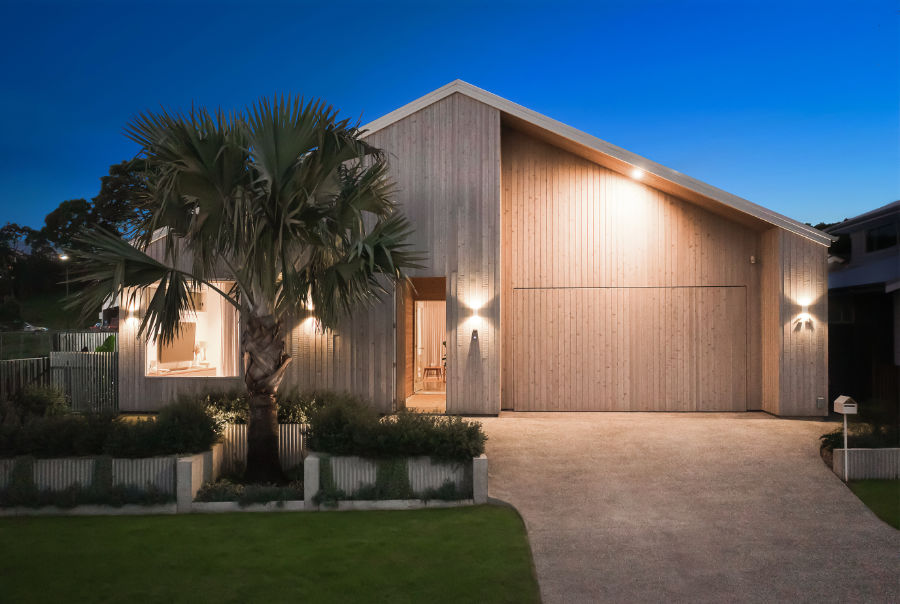
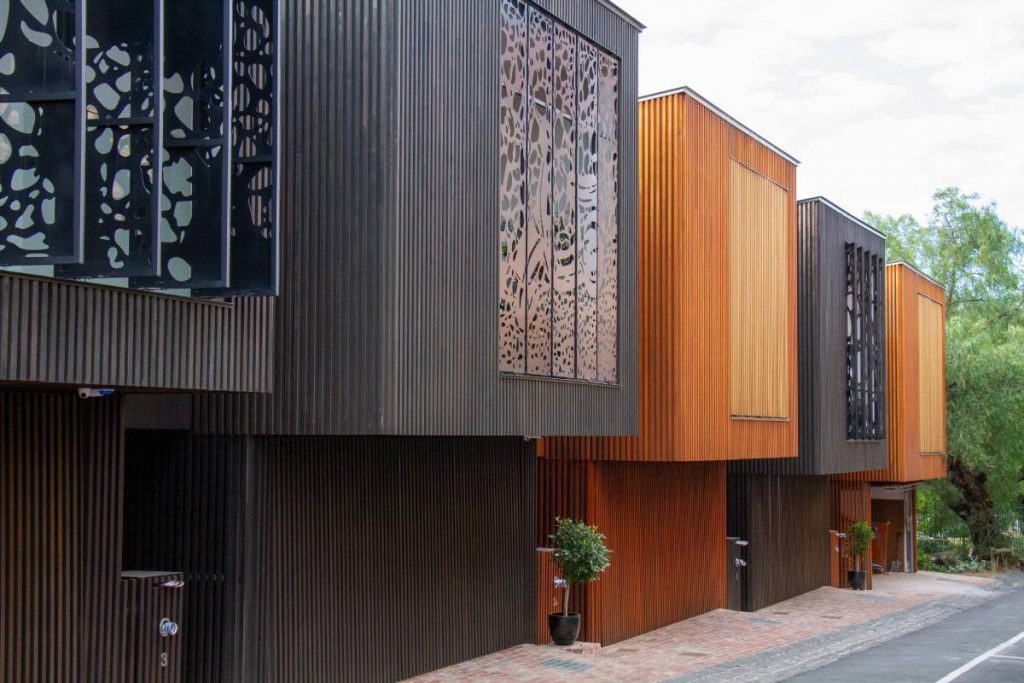
Charred timber has gained remarkable popularity in contemporary Australian architecture. Architects have adapted this innovative technique to match local conditions and aesthetics. Australian designers have welcomed Shou Sugi Ban because of its practical benefits and striking visual appeal.
Timber species selection plays a vital role in Australian applications. Japanese cedar was the traditional choice, but Australian architects have successfully adapted the technique to local hardwoods. They use bushfire-resistant hardwoods such as Spotted Gum and Ironbark, which offer exceptional durability in Australia’s harsh climate.
Australian architects recommend that their clients re-coat the charred timber with oil about every five years. Some clients prefer to let the timber naturally grey over time, which aligns with the wabi-sabi philosophy of finding beauty in imperfection.
Check out our Newport Charred Cladding, which was used for Kurin Lodge in Queensland. It expertly showcases the beauty of Shu Sugi Ban.
Applications of Shou Sugi Ban
Shou Sugi Ban has found its place in a variety of architectural settings, ranging from rustic farmhouses to sleek urban interiors. It opens up many creative possibilities beyond its traditional exterior cladding uses and remains a popular choice for projects across exterior wall panels. The distinctive black finish creates a striking contrast against concrete walls and lush landscaping.
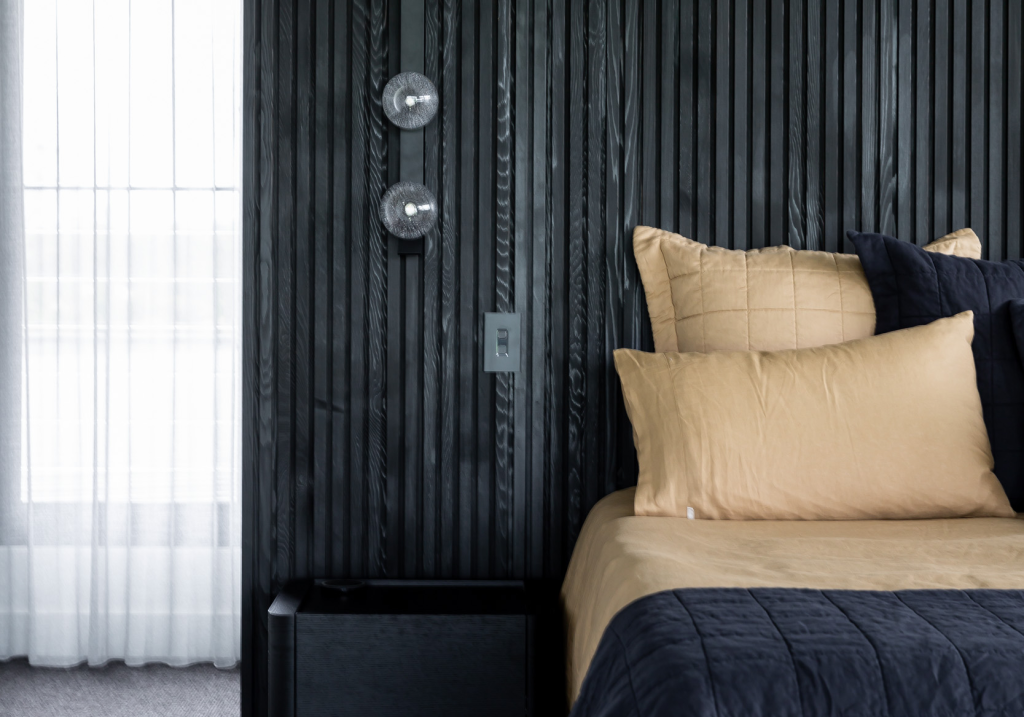
Shou Sugi Ban wood’s interior applications include:
– Accent walls and ceilings
– Column and beam wraps
– Wainscoting and decorative panels
– Custom furniture pieces
Furniture makers now use the technique to create everything from coffee tables to mirrors. Designers love using charred finishes to add texture to spaces. DIY enthusiasts can now also get pre-finished charred wood kits that don’t require dangerous open-flame techniques. These ready-to-install options let homeowners add this unique finish without learning the traditional Japanese method.

Maintenance and Care for Shou Sugi Ban Timber
Shou Sugi Ban timber requires some maintenance, but nowhere near as much as untreated wood. The charred layer shields the wood well, but it still needs periodic care to stay beautiful and functional.
Different countries handle maintenance in their own ways. Japanese builders let charred timber weather naturally after installation. The soot layer slowly washes away over decades to reveal silver or reddish-brown wood beneath. Western builders in North America and Australia prefer to keep the wood’s original look, which means some simple maintenance.
Your Shou Sugi Ban cladding needs:
– Survey and inspection: Look for blemishes, scratches, and spots where oil might fade faster.
– Gentle cleaning: A regular hose with a pistol grip nozzle works best—avoid power washers. Stubborn dirt needs just soapy water and a soft cloth.
– Board tightening: Tap loose boards back with a hammer to keep the surface flat. Headed face nails make retightening easy.
– Re-oiling: Each timber species needs its own schedule. Burnt Ash can go 3-5 years between treatments. Jarrah and Spotted Gum need attention every 2.5 years.
FAQs
What is the best wood for Shou Sugi Ban?
Japanese craftsmen used cypress (Cryptomeria japonica) because its porous structure creates a deep, stable char layer. Modern applications work well with several wood types:
– Cedar and cypress varieties work best outdoors
– Basswood and spruce make great choices as light, porous softwoods
– Pine resists shrinking and has straight grain
– Oak and maple need more expertise but create unique results
Burnt ash creates the deepest char layer. Jarrah and spotted gum come next in line.
How long does Shou Sugi Ban last?
This technique creates remarkably durable wood. Traditional Japanese buildings have stood strong for over 50 years with minimal upkeep. Regular maintenance, like re-oiling every 10-15 years, pushes the lifespan to 80-100 years. Wood species, installation methods, and weather exposure affect durability.
Is Shou Sugi Ban environmentally friendly?
The technique rates high on the sustainability scale. Fire replaces chemical preservatives, and the wood keeps storing carbon. Each cubic metre of wood locks away about 1 tonne of CO2.
The charred wood can be recycled completely when its life ends. Most producers use renewable energy and air-drying instead of energy-hungry kiln drying.
Can I DIY Shou Sugi Ban at home?
You can try this at home, but safety comes first. Traditional Japanese methods use three boards tied in a triangle to create a flue with fire inside.
Beginners should start with a propane torch for better control. You’ll need:
– A safe outdoor spot away from anything that burns
– Good air flow and water close by
– Heat-resistant gloves and eye protection
– The right brushes to remove extra char
The final step needs natural oil like linseed or tung oil to seal the surface.
We always recommend working with a trusted expert or supplier to ensure a high-quality finish and adherence to safe, industry-approved practices.
Is Shou Sugi Ban Right for Your Project?
Curious about integrating Shou Sugi Ban into your next project? Learn how Modinex adapts this ancient Japanese technique for Australian conditions using local hardwoods like Spotted Gum and Ironbark.
Get in touch to learn more about Shou Sugi Ban applications, benefits and best practices.
Article By Sophie Rodgers | 9 May 2025

Sophie Rodgers
Chief Marketing Officer
Sophie joined Modinex in 2024, bringing more than a decade of experience in the construction industry, with a particular focus on architectural specification development. Her deep understanding of the needs and challenges faced by architects, designers, and builders when selecting premium building materials shapes Modinex’s strategic approach to marketing and brand positioning. Sophie leads all aspects of the Modinex brand with a focus on communication, clarity, and connection.
