Aluminium vs Timber Cladding: A Material Comparison for Specifiers

Aluminium vs Timber Cladding: A Material Comparison for Specifiers

Timber and aluminium are the two materials architects and builders come back to most often when they’re cladding a project, and for good reason.

Both look great, both perform well, and both have a long track record on Australian buildings. 

But there are some big differences, and the right choice usually comes down to what the project needs most, not which material is objectively better.

Why This Comparison Comes Up So Often

Both materials keep showing up on Australian facades because both keep earning their place.

Timber brings a warmth and texture that’s hard to fake, and it’s had a real resurgence over the last few years as architecture has moved away from stark, all-white minimalism.

Aluminium, meanwhile, has come a long way since the days of only being useful for curtain walls and decorative trim. Today, it’s far more design-flexible than it used to be with a much wider range of profiles, colours and finishes than the plain sheet cladding of a decade ago.

That means the decision isn’t really about timber or aluminium as a category. It’s about which material suits the specific conditions of your project: the site, the exposure, the maintenance needs of whoever owns the building, and the look you’re going for.

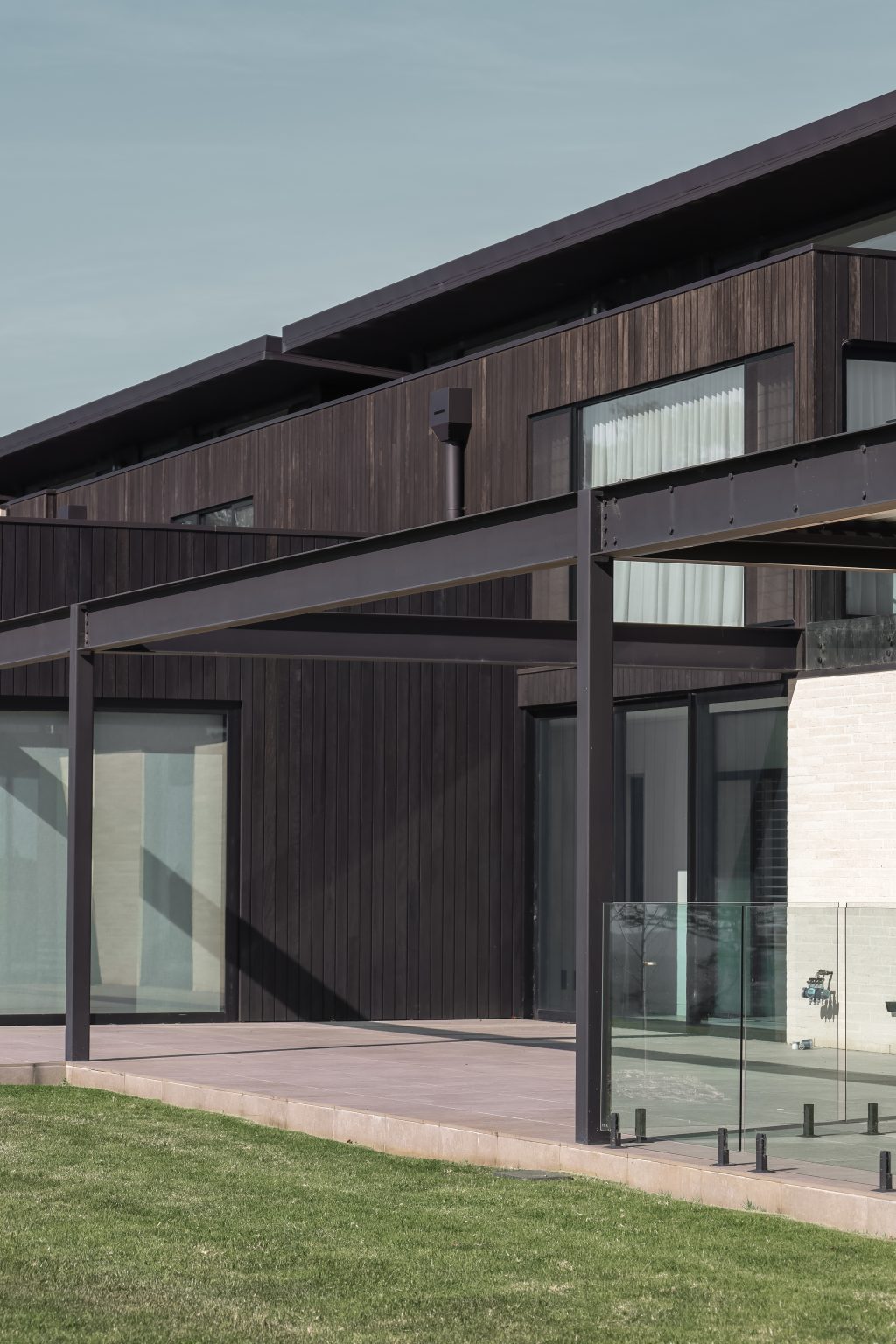
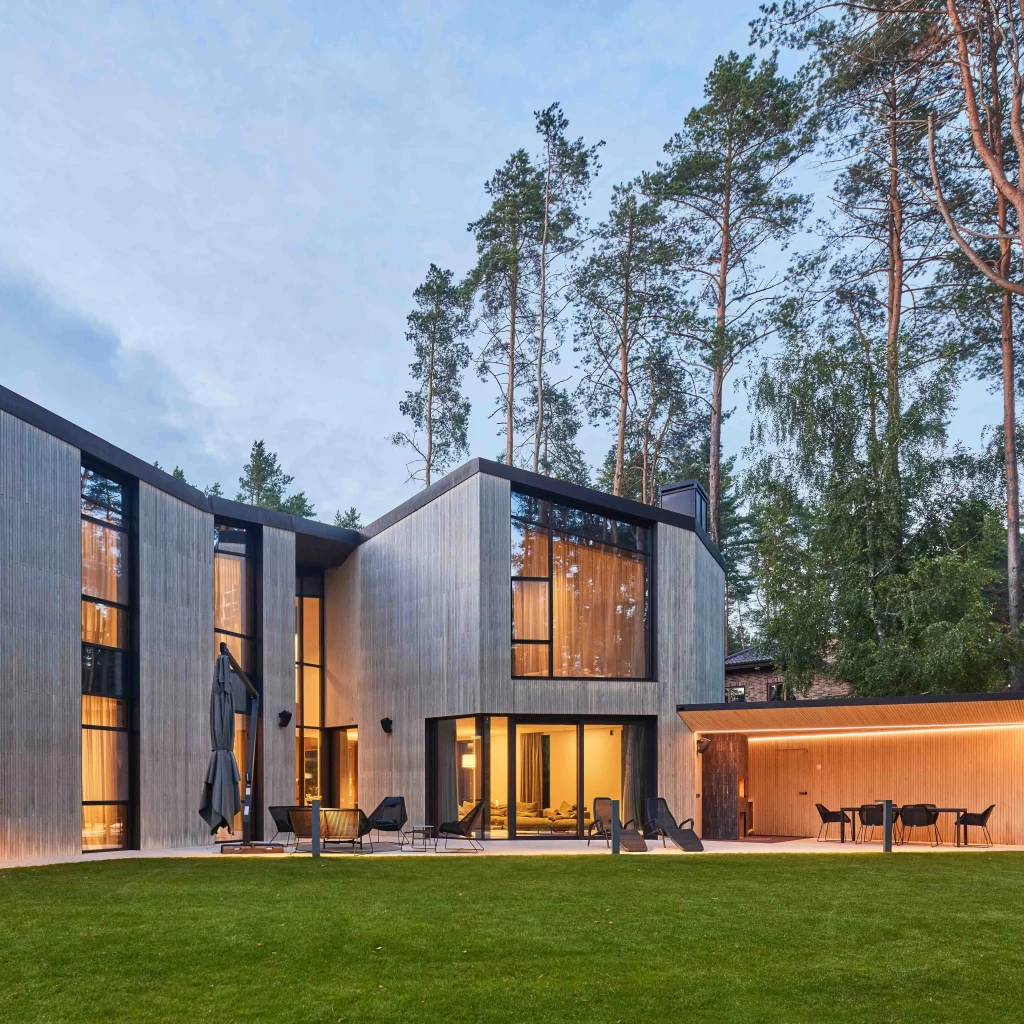
Thermal modified Hemlock cladding on a house

Durability and Weather Performance

Aluminium is the more forgiving material when it comes to raw exposure. It doesn’t rot, warp, or get eaten by insects, and it handles direct coastal salt air and constant UV without much fuss, which is why you’ll see it used in homes along the Australian coastline, on high-rise facades, and on buildings where nobody wants to think about the cladding again for a long time.

Timber needs a bit more consideration, but it’s far from fragile. The species you choose can make a big difference here.

Western Red Cedar and Hemlock are prized for cladding precisely because they’re naturally durable and dimensionally stable, and thermally modified timber takes that a step further. The timber is treated with steam and heat rather than chemicals, which significantly improves its stability and weather resistance and makes it a genuinely solid option in more exposed settings.

In short: if the site is brutal with exposed coastal, minimal maintenance access, harsh sun, aluminium has a slight edge. If it’s a more typical suburban or sheltered setting, timber (especially a modified or well-selected species) will perform well for decades.

Fire Performance

This is one area that can rule a material in or out before aesthetic preferences even enter the conversation.

Aluminium doesn’t burn, which makes it a straightforward choice in bushfire-prone areas and on taller or higher-risk buildings where fire compliance is a bigger part of the brief.

Timber can still be specified in most of these situations, but it usually needs a fire-retardant coating to meet the relevant requirements.

Our Fireshield range is a good example, and it’s already being used this way on public and community buildings where fire compliance and a natural material aesthetic both need to be satisfied at once.

Don’t assume timber is off the table on a fire-sensitive project, but do bring it into the conversation early so the right coating and documentation can be built into the spec from the start.

Maintenance

Aluminium is close to maintenance-free. An occasional wash is really all it needs, and a good powder-coat finish will hold its colour for a long time without fading or chalking.

Timber does need some ongoing care to keep looking its best, typically a recoat every several years depending on the coating system, species and exposure.

That said, this is one area where the gap has closed a lot. A growing number of our timber products are supplied precoated from the factory, which means a consistent, high-quality finish goes up without any wet finishing on site, and it noticeably extends the time before the next recoat is due. For clients who love the look of timber but are nervous about upkeep, that’s often the deciding factor.

Aesthetic and Design Flexibility

Timber’s biggest strength is hard to replicate: real warmth, grain and depth that shifts subtly with the light. It’s the material most likely to make a facade feel human-scaled and tactile rather than purely architectural.

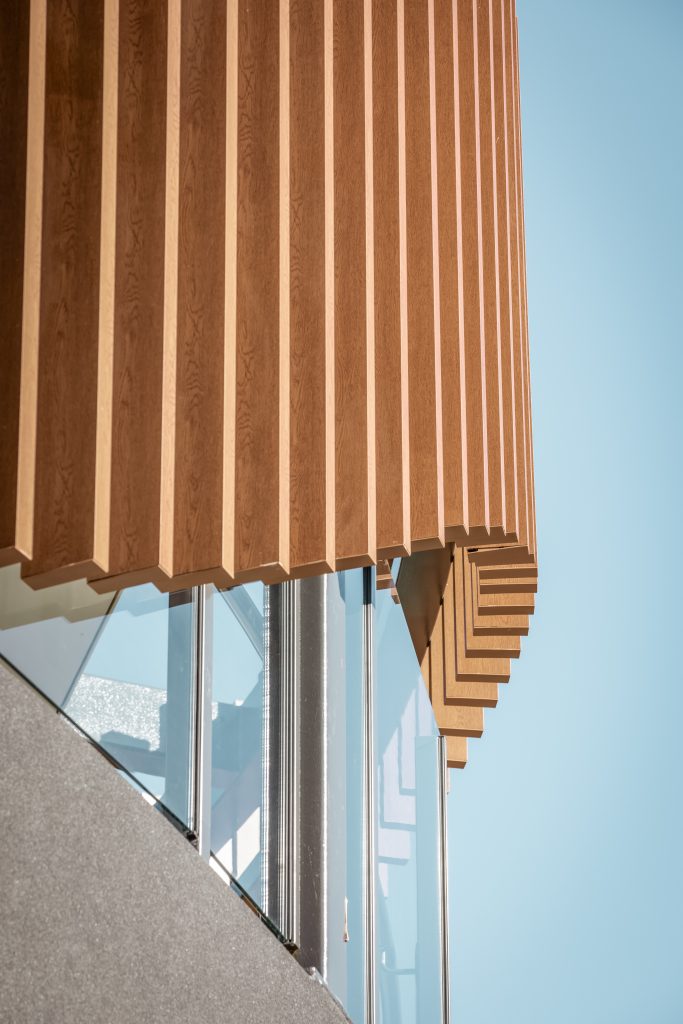
Aluminium’s strength is precision and consistency. It holds a colour exactly the same way across an entire elevation, and it can span further with a cleaner line, and profiles like castellated or fluted panels give it real dimension and shadow play. It’s come a long way from being seen as the “flat, cold” option.

It’s also the more forgiving material to specify at scale, since a large commercial facade will read consistently in a way that natural timber sometimes won’t.

Sustainability

Timber, when responsibly sourced, is one of the lowest-embodied-energy cladding materials available, especially since it can be seasoned using natural resources rather than energy-intensive kiln drying.

Aluminium has a heavier upfront manufacturing footprint, but it’s also one of the most genuinely recyclable building materials in existence, and the industry has made real progress on the energy used to produce it.

Modinex’s LocAl Green and LocAl Supergreen ranges, for example, are produced using renewable energy and cut CO2 emissions from primary aluminium production by up to 75%.

Add in aluminium’s long service life with essentially no replacement cycle, and the lifecycle picture ends up more balanced than either material’s raw manufacturing footprint would suggest on its own.

Comparison Table

If this matters most… Timber Aluminium
Warmth and tactility Strongly favoured Achievable with warm-toned coatings
Minimal ongoing maintenance Fair, better with precoated ranges
Strongly favoured
Harsh coastal or high-UV exposure Good with the right species/treatment Strongly favoured
Fire-sensitive sites Achievable with a fire-retardant coating Strongly favoured
Large-scale colour consistency More natural variation Strongly favoured
Lowest embodied energy Strongly favoured Improving, with recycled-content ranges

You Don't Actually Have to Choose…

A lot of the best facades going up in Australia right now don’t stick to one material for the entire project. They use each material where it does its best work.

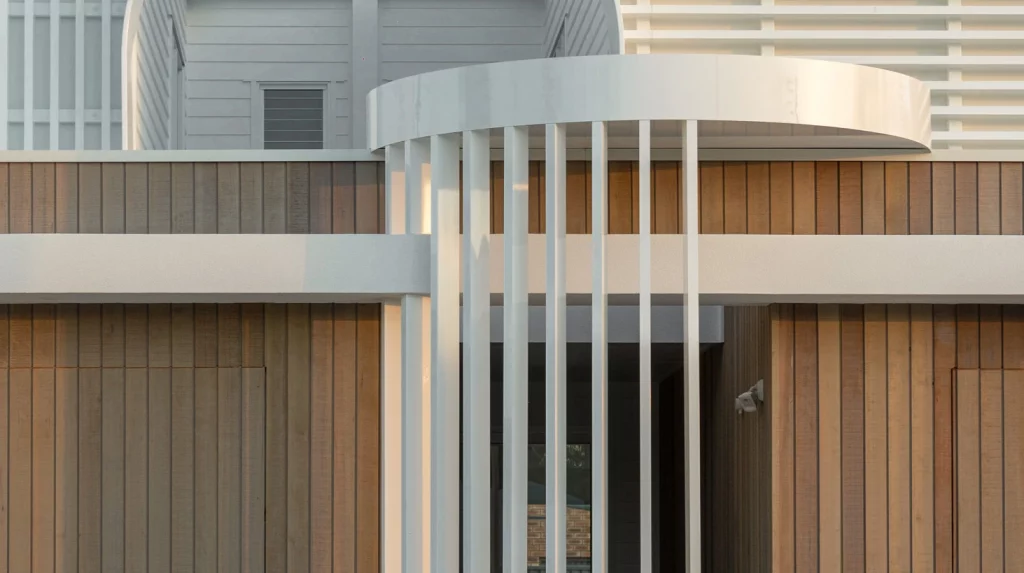
Easton, a Brisbane residential project completed earlier this year, is a good example: the main walls are clad in Modinex’s Alu Selekta Castelation Screenclad, giving the elevation clean, durable, long-lasting lines, while the exterior ceiling and soffit run in Hemline timber batten, adding warmth where people experience the building up close. Each material here is doing what it does best.

We carry extensive ranges in both materials, which puts us in a fairly unique position to have this conversation without a bias toward one or the other.

Our job is to help you land on the right answer for the project, not to sell you into whichever range we make the most of. We can talk through species, profiles, coatings and compliance for both timber and aluminium, and our CPD sessions cover fire compliance and material selection in more depth if that’s useful for your practice.

Get in touch to request a sample or chat to our team about the best option for your project.

Article By   Joel Leitch   |  August 2026

Joel Leitch

Project Consultant

Joel is an integral team member of NSW projects division with over a decade as a consultant to architects and builders. With extensive experience as a head of projects, Joel Leitch combines deep knowledge of natural timber, aluminium, and concrete to provide innovative and inspiring design solutions.

Similar Posts

Designing with Timber: Here Are 5 Reasons

Published 29 May 2026

Designing with Timber: Here Are 5 Reasons

The Benefits of Solid Timber Acoustic Ceilings

Published 6 March 2024

The Benefits of Solid Timber Acoustic Ceilings

Cyclones and Specification – Ensuring Your Material Stands Up to Severe Weather

Published 29 May 2026

Cyclones and Specification – Ensuring Your Material Stands Up to Severe Weather