 1800 156 455
Why Choose Aluminium for Ceiling Systems
Why Choose Aluminium for Ceiling Systems
Not every ceiling calls for the same material. Timber brings warmth and acoustic character that’s hard to beat in the right interior setting.
But there are projects where aluminium outperforms it on almost every measure, and knowing when to use it can help you create the space you’ve always envisioned.
At Modinex, we’ve seen plenty of designs where aluminium ceiling systems genuinely earn their place, and we’ll show you the environments, applications and project types where its properties make it the more logical choice.
Where Aluminium Ceilings Outperform Timber
Outdoor soffits and covered exteriors
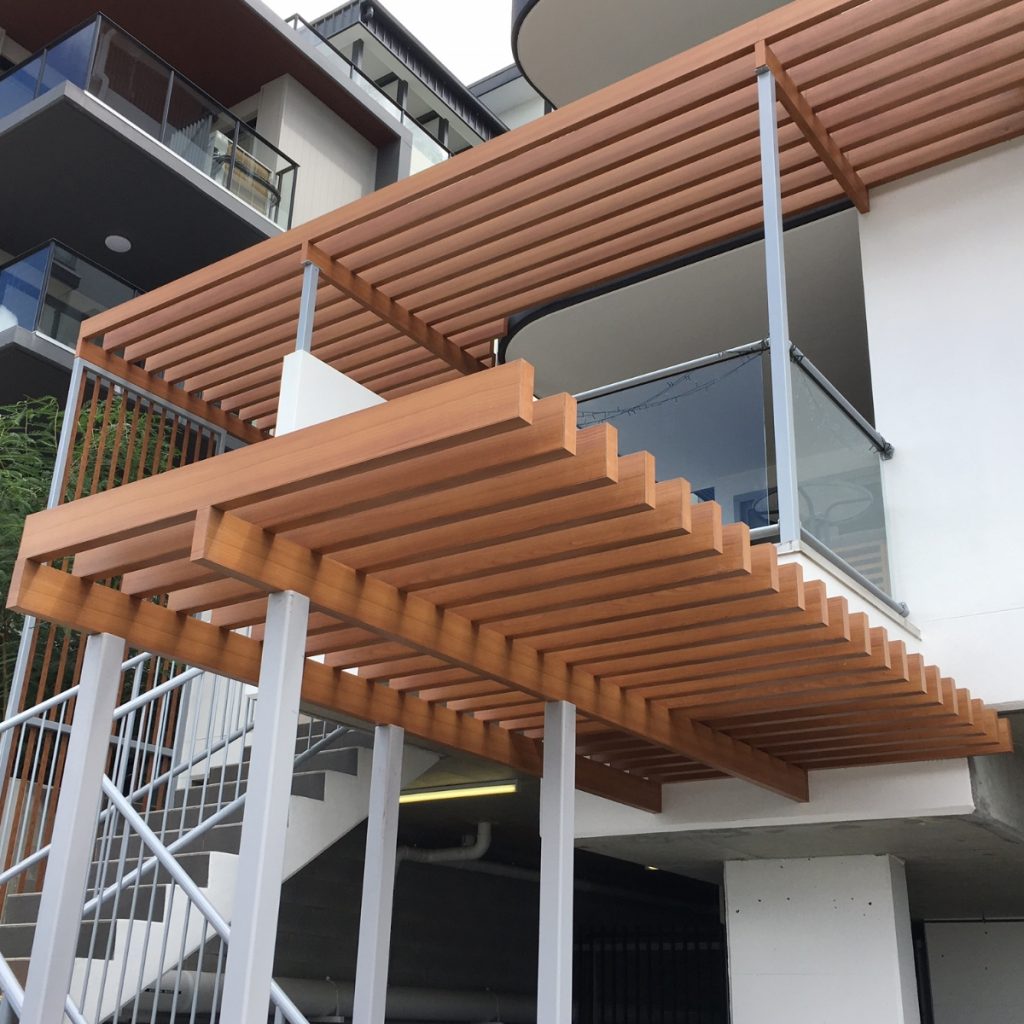
Soffits are exposed to UV, moisture and temperature swings that will eventually compromise any timber product. Aluminium doesn’t absorb moisture, and its powder-coated finish holds up without the constant maintenance timber needs. For residential alfresco ceilings, covered walkways and building overhangs, it’s the material that keeps working without requiring attention.
High-moisture environments
Anywhere condensation, humidity or direct water exposure is a factor, aluminium is the straightforward choice. There’s no risk of warping or mould taking hold in the substrate, and an occasional wash is all the ongoing maintenance it needs.
Fire-rated and bushfire-prone applications
Aluminium is non-combustible by nature. In bushfire-prone areas or commercial projects with specific fire rating requirements, that removes a variable that even treated timber can’t fully eliminate. For certifiers and project managers working through fire compliance, it simplifies the process.
Commercial and high-traffic settings
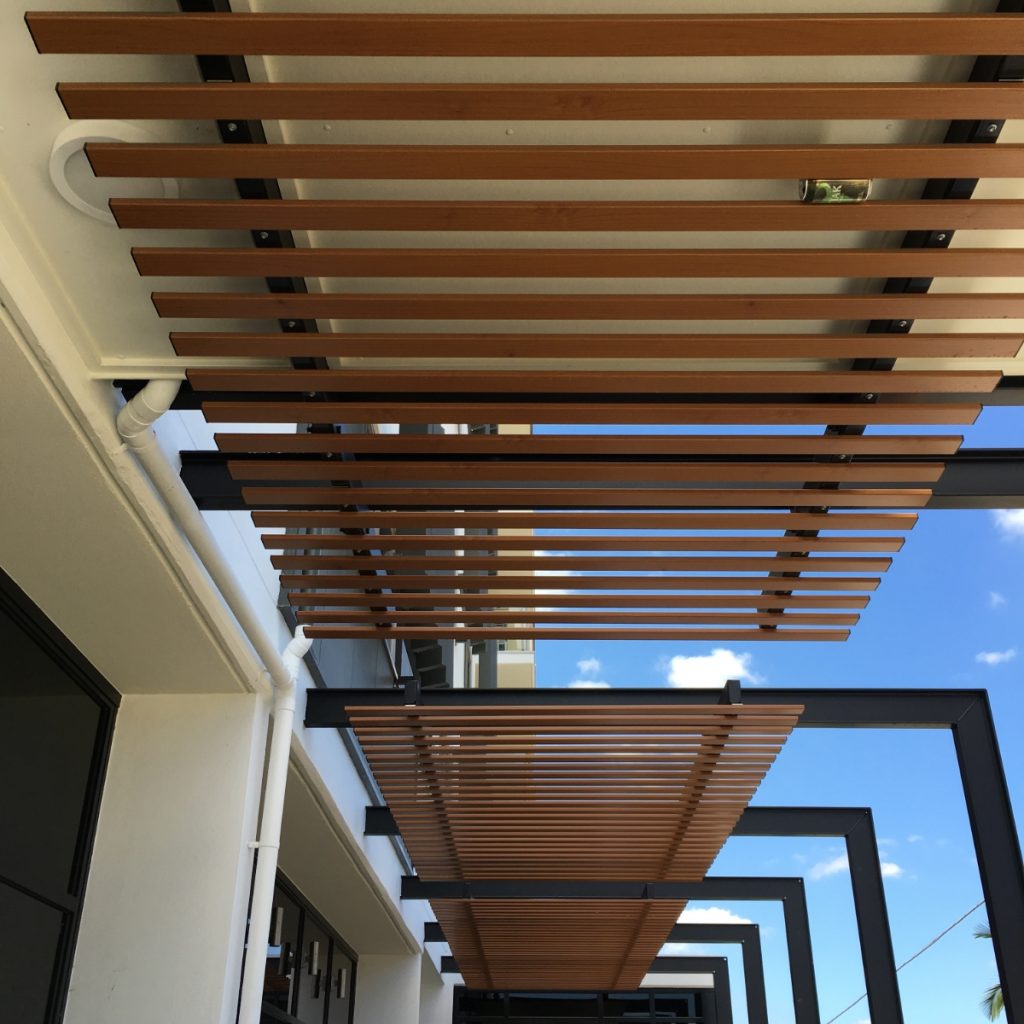
Car parks, transport hubs, retail centres and commercial lobbies operate under conditions that interior residential ceilings never face. Aluminium holds its appearance under sustained use, humidity and cleaning regimes without refinishing. Its non-combustible properties also make fire compliance straightforward in these settings, and batten systems provide the ventilation that multi-deck car park structures require without introducing additional structure to achieve long spans.

Design Flexibility
Choosing aluminium doesn’t mean you’re limiting your choices. Modern aluminium ceiling systems offer:
– Profiles and formats: Battens, panels and louvres in a range of widths and depths. You can achieve the same shadow lines that make timber batten ceilings so appealing, in a material that performs better in demanding environments.
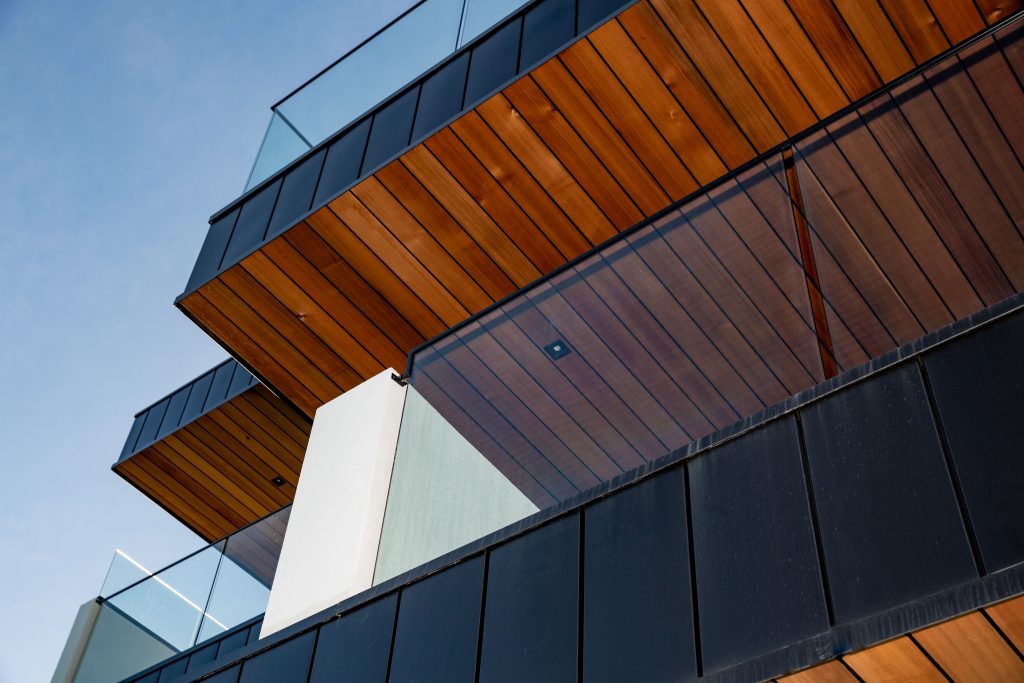
– Finish options: Powder-coated finishes are available in a wide range of colours, including timber-look options. From a normal viewing distance, a quality timber-look aluminium finish is a convincing alternative to the real thing with none of the maintenance.
– Spacing control: Like timber batten systems, aluminium batten ceilings allow you to tune the spacing between individual battens to control the visual weight of the ceiling, the amount of light that passes through, and the degree to which services above are concealed.
Applications
Commercial lobbies and public buildings
Entry and lobby ceilings set the tone for the whole building. Aluminium ceiling systems give architects the design language of a batten or panel ceiling with the performance assurance that a high-traffic, publicly accessible space demands.
Covered walkways and transit infrastructure
Exposure to the elements, cleaning regimes, and long service life requirements make aluminium the default material choice for covered pedestrian infrastructure. It performs without intervention in a way that timber simply can’t.
Residential alfresco areas
Outdoor entertaining areas are where the case for aluminium is easiest to make to homeowners. A timber ceiling in an alfresco needs maintenance. An aluminium one doesn’t. The finish quality and available design options mean you’re not sacrificing aesthetics to achieve that outcome.
Car parks
Aluminium battens are widely used for car park ceilings and soffits. They provide the ventilation that multi-deck structures require, meet fire compliance requirements without additional treatment, and hold their appearance under conditions that would compromise other materials.
When Timber Is Still the Better Choice
Aluminium has some great advantages, but there are ceiling environments where timber is still the more appropriate specification.
Interior acoustic performance
Timber absorbs sound in a way that aluminium doesn’t. In open-plan offices, hospitality spaces and any interior where acoustic control is important, timber ceiling systems will outperform aluminium.
Interior warmth
In residential interiors, the natural warmth of timber is genuinely difficult to replicate. Timber-look aluminium finishes are convincing at a distance, but in a living space where people are close to the material and natural light plays across the surface, real timber reads differently. For prestige residential interiors, the material quality of timber tends to win.
Budget-sensitive interior projects
For straightforward interior ceiling applications without moisture, fire or maintenance concerns, timber is often the more cost-effective choice upfront. Where the long-term maintenance savings don’t offset the higher initial cost of aluminium, timber makes sense.
Choosing the Right Ceiling Material
The decision between aluminium and timber for a ceiling application usually comes down to environment and use. In exposed, high-moisture, fire-sensitive or high-traffic settings, aluminium is the more logical specification. In interior spaces where warmth, acoustic performance and material authenticity are the priority, timber often wins.
Here at Modinex, we supply both, and our experts can help you decide on the best choice for your project. If you’re trying to decide the right material for your ceiling and want to see the finish quality in person, request a sample or get in touch with our team.
Article By Sophie Rodgers | 9 May 2025

Sophie Rodgers
Chief Marketing Officer
Sophie joined Modinex in 2024, bringing more than a decade of experience in the construction industry, with a particular focus on architectural specification development. Her deep understanding of the needs and challenges faced by architects, designers, and builders when selecting premium building materials shapes Modinex’s strategic approach to marketing and brand positioning. Sophie leads all aspects of the Modinex brand with a focus on communication, clarity, and connection.
