 1800 156 455
What is Composite Decking – Your Guide for 2025
What is Composite Decking – Your Guide for 2026
Composite decking combines recycled wood fibres and plastics to create a tough, eco-friendly alternative to regular timber decking. The wood content gives the board its structure and natural appearance; the polymer binder gives it resistance to moisture, rot and insect attack.
Unlike traditional timber decking, which requires maintenance every 1 to 3 years and replacement after 10 to 15 years, composite decking only requires an occasional quick wash with soap and water.
On top of that, it stands up better to moisture, UV damage, insects, mould, and mildew, making it well suited for any climate.
Choosing the Right Composite Decking for Your Home
Choosing the right composite decking material becomes easier once you understand the key differences between available options. These days, composite decking comes in several distinct types, each with its own unique advantages that suit different needs.
Solid composite boards
Hollow composite boards
Hollow composite boards weigh less than solid boards, which makes them useful when retrofitting over an existing substructure with limited load capacity, or on elevated installations where dead load matters.
The trade-off is lower impact resistance and exposed board ends that require capping or trim for a finished appearance.
Capped composite boards
Capped composite boards carry a co-extruded polymer sleeve that substantially improves resistance to staining, fading and moisture ingress.
The cap is the single biggest determinant of long-term appearance. Uncapped boards will weather and fade noticeably in the first year or two; fully capped boards (capped on all four sides, not just the top and edges) hold colour far longer and resist mould growth on the underside.
Capped PVC
Capped PVC contains no wood fibre at all. It is the lightest and most stain- and moisture-resistant option, and the most expensive.
Because it has no organic content, it cannot support mould growth internally — worth considering for permanently damp environments such as jetties, pool surrounds and rainforest sites.
Colour and texture options
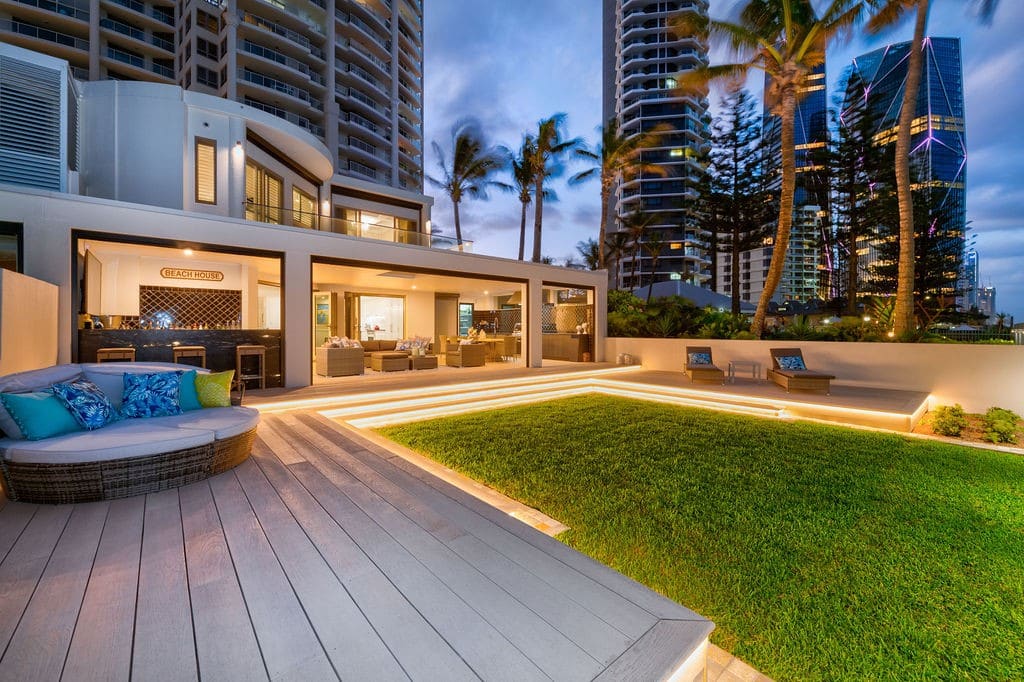
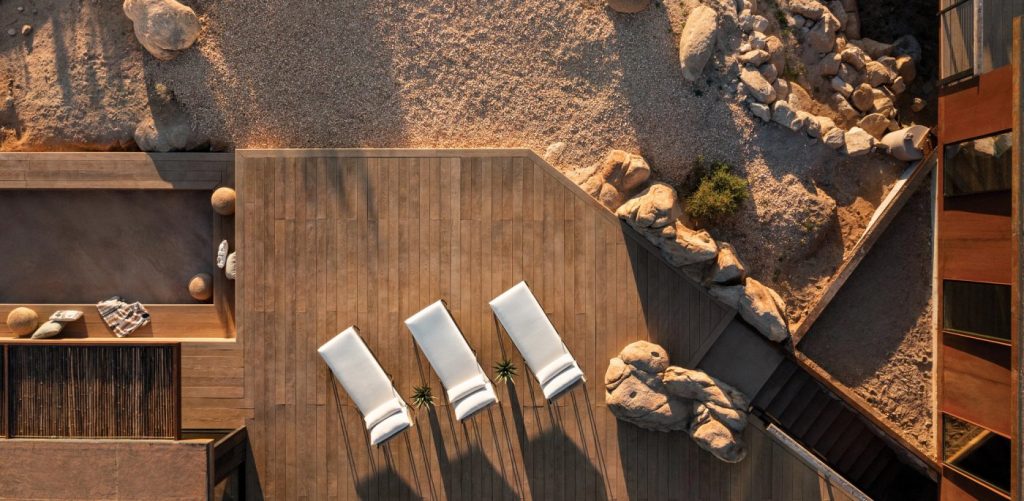
Composite decking is available in a wide range of colours and textures to suit most architectural styles, with embossed wood-grain patterns that closely resemble natural timber.
Most composites lighten during the first weathering period and settle after roughly 8 to 10 weeks. The sample you hold in the showroom is not the colour you will live with, so ask what the weathered colour looks like.
Try to match the trim, not the walls. Decking usually reads better against fascia, window frames, balustrade and pergola timbers than against the main wall colour, because those are the elements the eye compares it to directly.
Maintenance and Longevity
Composite decking needs very little maintenance but is exceptionally durable. A well-laid-out care routine will ensure your deck looks great and stays strong for years to come.
Seasonal Cleaning Requirements
Simple cleaning routines change with the seasons. In spring and autumn, you should sweep away debris and leaves. A soft-bristled brush with warm, soapy water works great to clean surface dirt.
Your composite decking resists stains well, but you might need deep cleaning sometimes. A gentle pressure washer works safely when set below 3,100 PSI. Keep the washer at least 20cm away from the surface to remove tough grime.
Handling Stains, Scratches and Damage
Most food and drink stains lift with warm soapy water. Oily or greasy stains respond to a household degreaser applied promptly, followed by a thorough rinse. Tannin marks from fallen leaves or pot plants generally need a dedicated composite deck cleaner.
Light surface scratches often become less visible over several months as the board weathers and the surrounding surface dulls to match. However, deeper scratches will require special treatment:
– Light scratches: Clean the area, then allow it to weather. Avoid abrasives, which will change the surface texture and make the repair more visible than the scratch.
– Stubborn marks: Use isopropyl alcohol on a cloth and scrub along the grain
– Deep damage: Replace boards when needed, especially if they’re structurally compromised
Expected Lifespan of Different Composite Types
Composite decking lasts much longer than traditional timber. Wood decks typically last 10-15 years, while composite options offer much more durability:
– Standard composite decking could last as long as 25-30 years with proper maintenance.
– Capped composite provides better protection against fading and staining, lasting up to 30 years.
– Premium capped PVC is the most durable choice and could last as long as 50 years.
Correct installation, combined with proper ventilation and drainage, will prevent moisture problems. Regular checks of structural parts will help you spot potential issues early.
Performance Metrics
The newest composite decking shows exceptional strength against moisture problems. Lab tests confirm that quality boards stay stable even when exposed to temperatures between 20°C and 60°C. Premium composite materials have water absorption rates of 0%, while standard versions show about 2% absorption.
Weather Resistance Capabilities
The newest composite decking shows exceptional strength against moisture problems. Lab tests confirm that quality boards stay stable even when exposed to temperatures between 20°C and 60°C. Premium composite materials have water absorption rates of 0%, while standard versions show about 2% absorption.
Load-Bearing Capacity and Structural Integrity
Composite decking’s structural performance has significantly improved. Tests show that composite slabs merge the load-bearing strength of steel decking with the compressive resistance of concrete. However, temperature changes can affect how much weight the decking can hold.
UV Stability and Colour Retention
New UV protection technology has changed how well composite decking keeps its colour. Premium boards get lighter during the first weathering period. The colour settles after 8-10 weeks. Light-coloured boards resist fading better than darker ones.
Slip Resistance and Safety Features
Modern composite decking products have impressive wet-slip resistance ratings. Textured surfaces and new grip patterns have made the decking much safer in wet conditions. Ridged decking boards are better at preventing slips than smooth-finished ones. These safety features make composite decking perfect for areas that often get wet.
Environmental Impact and Sustainability Credentials
Composite decking has become more eco-friendly, giving homeowners better options for their outdoor spaces. New manufacturing methods have made these products much better for the environment.
Heat Retention in Direct Sun
All decking surfaces get hot in full sun, and composite generally runs hotter underfoot than lighter-coloured timber. The factors that matter:
– Colour. Darker boards absorb more solar radiation. Light and mid tones are noticeably cooler underfoot.
– Surface finish. Textured and ridged surfaces reduce the contact area with bare feet and tend to feel cooler than smooth surfaces at the same temperature.
– Shade and orientation. A pergola, awning, sail or well-placed tree does more for surface temperature than any product choice. West and north-west facing decks with no shade are the difficult cases.
– Airflow. Ventilated substructures shed heat faster than sealed ones.
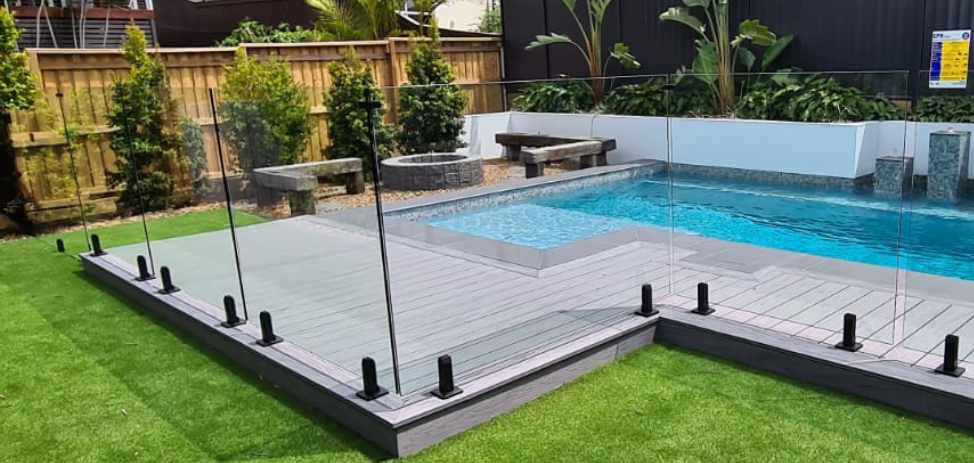
For pool surrounds, children’s play areas and decks that will be walked on barefoot in summer, plan for shade and choose a lighter colour.

When Composite Decking Isn't The Right Choice
Composite suits most projects, but not all. It is worth being direct about the exceptions:
Fully exposed decks in extreme heat with no shade option
Surface temperature may be uncomfortable underfoot in peak summer regardless of colour choice.
Heritage and conservation projects
Heritage and conservation projects where authentic timber is a condition of approval.
Short-term budget projects.
If the deck only needs to last five years, or the property is being sold shortly, treated timber is the more economical choice.
Where a refinishable surface is wanted.
Composite cannot be sanded back and recoated. It is what it is for its whole life. A strength if you like the look, a limitation if you expect to change it.
Get Expert Composite Decking Advice and Solutions with Modinex
Modinex’s composite decking solutions are perfect for a range of commercial and public spaces, including roof terraces, balconies, rainforest retreats, jetties, and boardwalks.
Check out our full catalogue of products or contact us today to see if composite decking is the right choice for your next project.
Article By Sophie Rodgers | 9 May 2025

Sophie Rodgers
Chief Marketing Officer
Sophie joined Modinex in 2024, bringing more than a decade of experience in the construction industry, with a particular focus on architectural specification development. Her deep understanding of the needs and challenges faced by architects, designers, and builders when selecting premium building materials shapes Modinex’s strategic approach to marketing and brand positioning. Sophie leads all aspects of the Modinex brand with a focus on communication, clarity, and connection.
