 1800 156 455
Shiplap Cladding Profiles Design Ideas and Material Options
Shiplap Cladding Profiles Design Ideas and Material Options
Shiplap is one of the most enduring cladding profiles in Australian architecture, and it’s not hard to see why.
The overlapping boards create a continuous, uninterrupted surface with a shadow line that adds depth without drama. It works just as well on a heritage cottage as on contemporary coastal homes.
If you’re considering shiplap for a project, the decisions ahead of you are less about whether it will look good and more about which material, which species, and which finish will perform best in your specific context.
As the experts in architectural timber, our team at Modinex has put together this guide to help you make the right choice.
What Makes Shiplap Different
Shiplap boards are profiled so that each board overlaps the one below it. This does two things: it creates a weathertight surface that sheds water effectively, and it produces that characteristic shadow line running horizontally (or vertically) across the face of the cladding.
The result is a facade or interior wall with visual texture that’s more interesting than flat sheet cladding, but quieter and more refined than a heavily profiled surface. It sits comfortably in both traditional and contemporary design, which is one reason architects keep coming back to it.
Where to Use Shiplap Cladding
– Exterior facades: These are the natural home for shiplap. The overlapping profile is purpose-built for exposure to the elements, helping to manage water runoff and allowing for the natural movement of timber.
– Interior feature walls: Shiplap has seen a real resurgence in interiors lately. The profile adds warmth and texture to living rooms, bedrooms and hallways without overwhelming the space. In an interior space, you’re freed from weather and maintenance concerns, which opens up species and finish options that might not be practical outside.
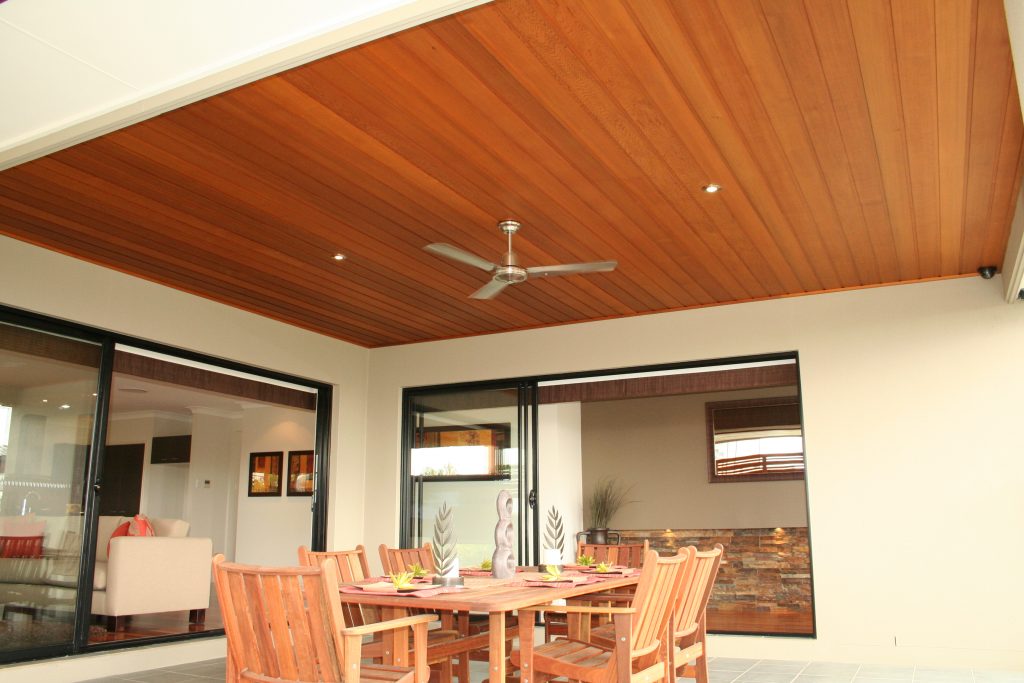
– Ceiling lining: The continuous profile with its shadow detail creates a refined overhead plane that’s more architectural than standard lining board. It suits alfresco areas, covered verandahs, and internal living spaces with raked ceilings.
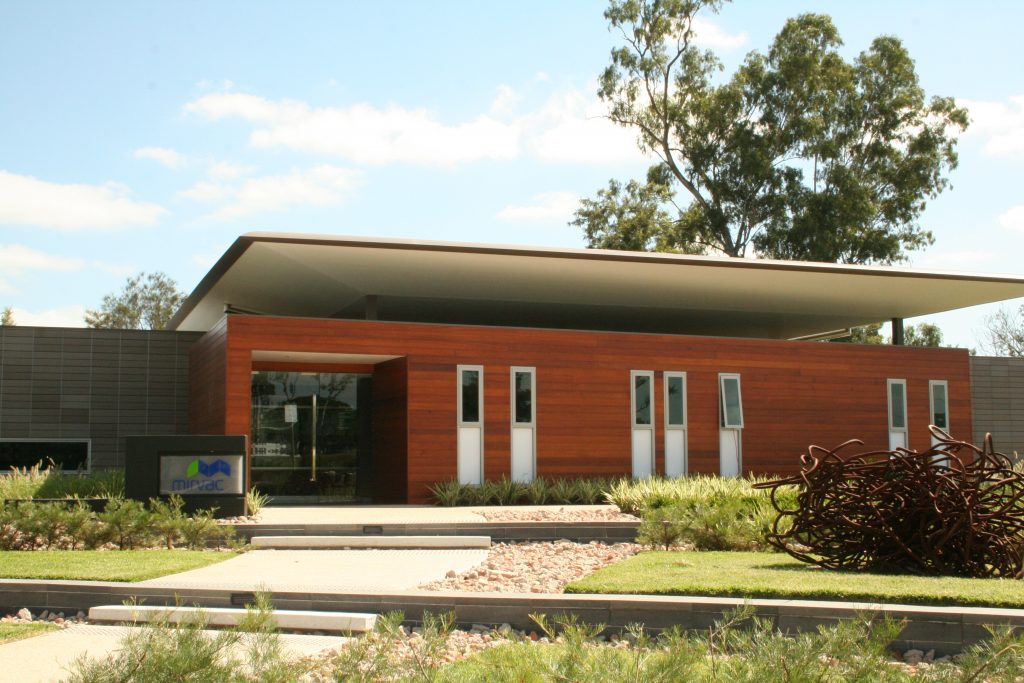
– Commercial and hospitality: Restaurants, hotels, boutique retail and civic projects use shiplap for its natural warmth and tactile quality. The material range available through Modinex supports specification at this scale, with certified species and factory-applied finish options that suit commercial timelines.
Material Options: Softwood vs Hardwood
Different species behave differently outdoors, look different, and require different levels of maintenance. Here’s how to think about the main options.
Softwoods
Western Red Cedar: The most popular choice for good reason. It’s naturally resistant to decay, dimensionally stable compared to most species, and has a warm reddish-brown tone that weathers to an attractive silver-grey if left untreated. It’s lightweight, easy to work with, and available in PEFC-certified plantation stock. For external facades in most Australian climates, it’s a reliable default.
Hemlock: A cost-effective softwood suited to interior applications. It’s not recommended for full exposure to the elements, but it performs well in covered areas and internal spaces where you want a lighter, more neutral timber tone. Thermally modified hemlock takes the base species and heat-treats it to significantly improve its durability and weather resistance, opening up external applications that standard hemlock can’t handle.
Accoya: This is a modified radiata pine with exceptional dimensional stability and durability, backed by a 50-year above-ground warranty. For projects where movement and long-term performance are the primary concern, it’s hard to beat.
Hardwoods
Australian hardwoods bring a completely different visual character. Blackbutt, Spotted Gum and Ironbark are the workhorses of the external hardwood range, all highly durable, visually distinctive, and suited to exposed facades in bushfire-prone areas. Their tight grain and density mean they’re slower to absorb moisture and more resistant to the weathering that challenges softer species.

How Finish Options Affect the Result
The finish you choose shapes both the immediate appearance and the long-term maintenance commitment. There are two main paths to take.
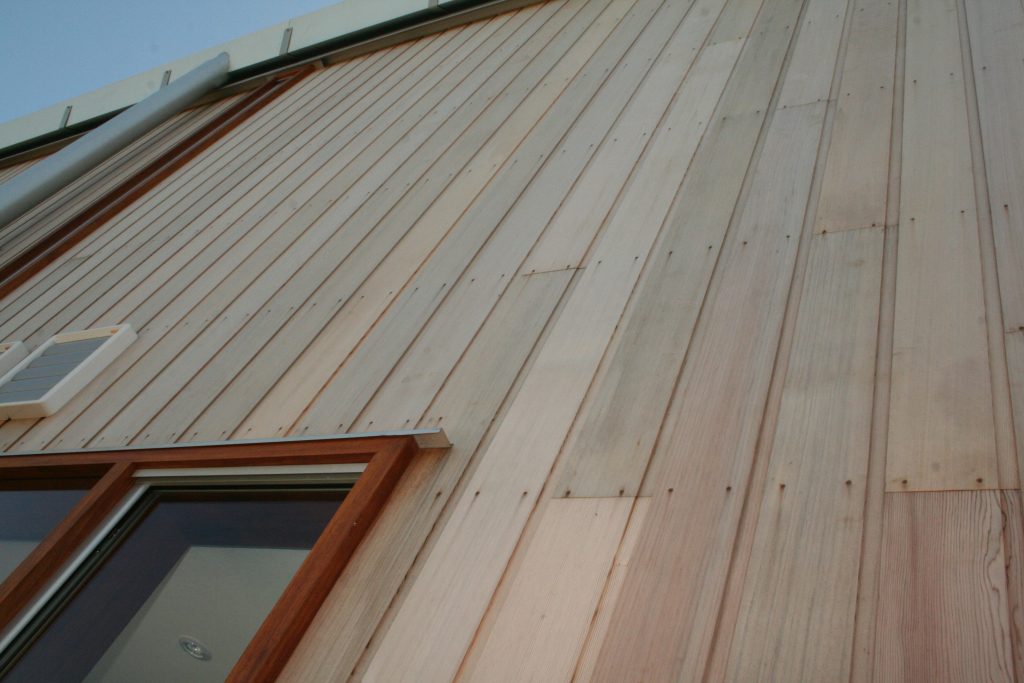
The first is that you can maintain the colour with regular oiling. This keeps the timber looking fresh and close to its natural tone. It requires re-application every one to three years depending on exposure, but it’s straightforward, and the results are worth it for most clients who want timber to look like timber.
If you want to avoid that task, you can let it weather naturally to a soft silver-grey. This is a genuinely beautiful outcome for coastal homes, bush settings and contemporary facades where a weathered look suits the surroundings. It requires less active maintenance, though the timber cells still need periodic treatment to prevent drying and cracking. This isn’t a set and forget option, but it is a lower-maintenance one.
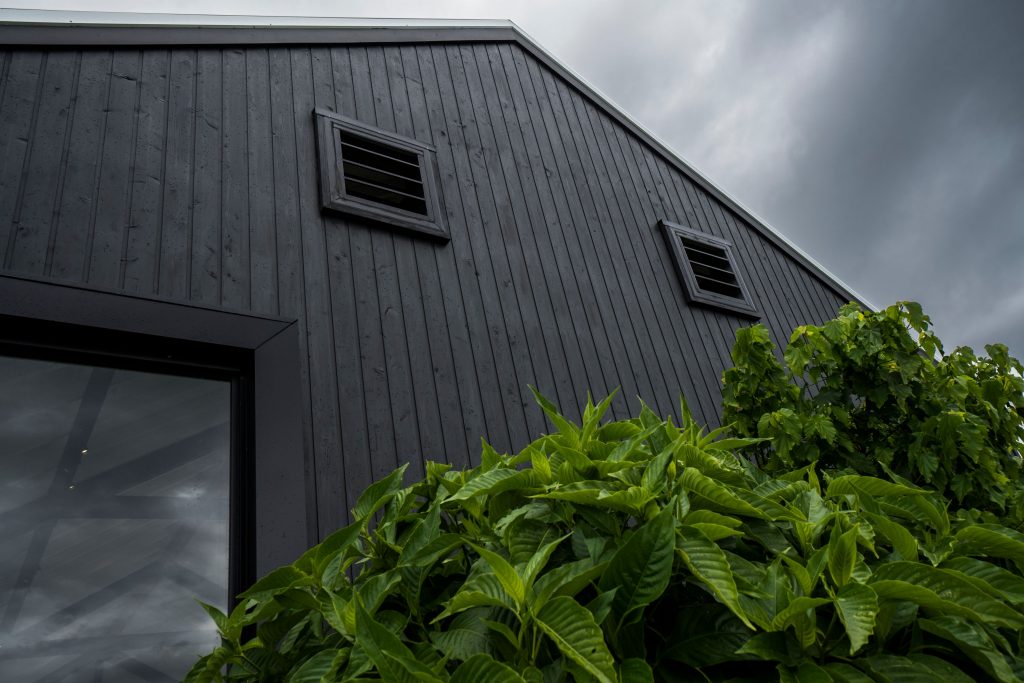
Beyond the natural or weathered choice, Modinex offers a range of applied finishes, including Circular Sawn, Band Sawn, Shot Blasted, Wire Brushed, TwoTone and Charred (Shou Sugi Ban). The charred finish in particular has become popular in contemporary Australian residential design, painting well with raw concrete and steel.
A Note on Maintenance
Timber shiplap is not a maintenance-free product, and the maintenance commitment is the main trade-off against aluminium or composite alternatives.
That said, the maintenance required is simple: regular cleaning and periodic re-oiling or re-coating, depending on the finish you’ve chosen. The species you choose makes a difference here too, with denser species like Blackbutt and Ironbark needing less frequent attention than softer ones. The reward is a material that genuinely improves with age. Well-maintained timber shiplap develops character that no manufactured product replicates.
Softwoods
Western Red Cedar: The most popular choice for good reason. It’s naturally resistant to decay, dimensionally stable compared to most species, and has a warm reddish-brown tone that weathers to an attractive silver-grey if left untreated. It’s lightweight, easy to work with, and available in PEFC-certified plantation stock. For external facades in most Australian climates, it’s a reliable default.
Hemlock: A cost-effective softwood suited to interior applications. It’s not recommended for full exposure to the elements, but it performs well in covered areas and internal spaces where you want a lighter, more neutral timber tone. Thermally modified hemlock takes the base species and heat-treats it to significantly improve its durability and weather resistance, opening up external applications that standard hemlock can’t handle.
Accoya: This is a modified radiata pine with exceptional dimensional stability and durability, backed by a 50-year above-ground warranty. For projects where movement and long-term performance are the primary concern, it’s hard to beat.
Hardwoods
Australian hardwoods bring a completely different visual character. Blackbutt, Spotted Gum and Ironbark are the workhorses of the external hardwood range, all highly durable, visually distinctive, and suited to exposed facades in bushfire-prone areas. Their tight grain and density mean they’re slower to absorb moisture and more resistant to the weathering that challenges softer species.
See It in Person
Timber looks different in person than it does on screen, and it looks different again once it’s on a wall and lit by natural light. If you’re specifying shiplap, samples are worth the time.
Request a sample from our team to compare species and finishes side by side, or get in touch to discuss the right option for your project.
Article By Sophie Rodgers | 9 May 2025

Sophie Rodgers
Chief Marketing Officer
Sophie joined Modinex in 2024, bringing more than a decade of experience in the construction industry, with a particular focus on architectural specification development. Her deep understanding of the needs and challenges faced by architects, designers, and builders when selecting premium building materials shapes Modinex’s strategic approach to marketing and brand positioning. Sophie leads all aspects of the Modinex brand with a focus on communication, clarity, and connection.
