 1800 156 455
How to Use Fluted Panels in Interior and Exterior Design
How to Use Fluted Panels in Interior and Exterior Design
Fluted panels have gone from a detail you’d only see in high-end architectural projects to one of the most popular wall and ceiling treatments in Australian homes. They’re showing up on feature walls, kitchen islands, exterior cladding, and ceilings, and it’s not hard to see why. The rounded ridges add depth and texture to a surface that flat timber or painted walls simply can’t match.
But there’s more to getting it right than just picking a panel and putting it up. The direction you run the boards, the timber species you choose, and whether it’s going inside or outside all make a real difference to how it looks and how it holds up over time.
This guide walks through the main things worth knowing, whether you’re renovating a living room or planning a new build.
What Are Fluted Panels?
Fluted panels are boards with a series of continuous, rounded ridges running along their length. Think of it like a corrugated surface, but with smooth, flowing curves rather than sharp angles.
That curved profile is what sets them apart from channel cladding, which uses square-edged grooves and produces much sharper, more defined lines. Fluted panels create softer, more gradual shadow lines that shift as the light changes through the day.
Modinex’s Flute profile is precision-machined from sustainably certified timber, available in a range of species to suit different applications, and the same profile works equally well indoors and out.

Where Fluted Panels Work Best
Interior Feature Walls
This is where most people start, and the visual impact is immediate.
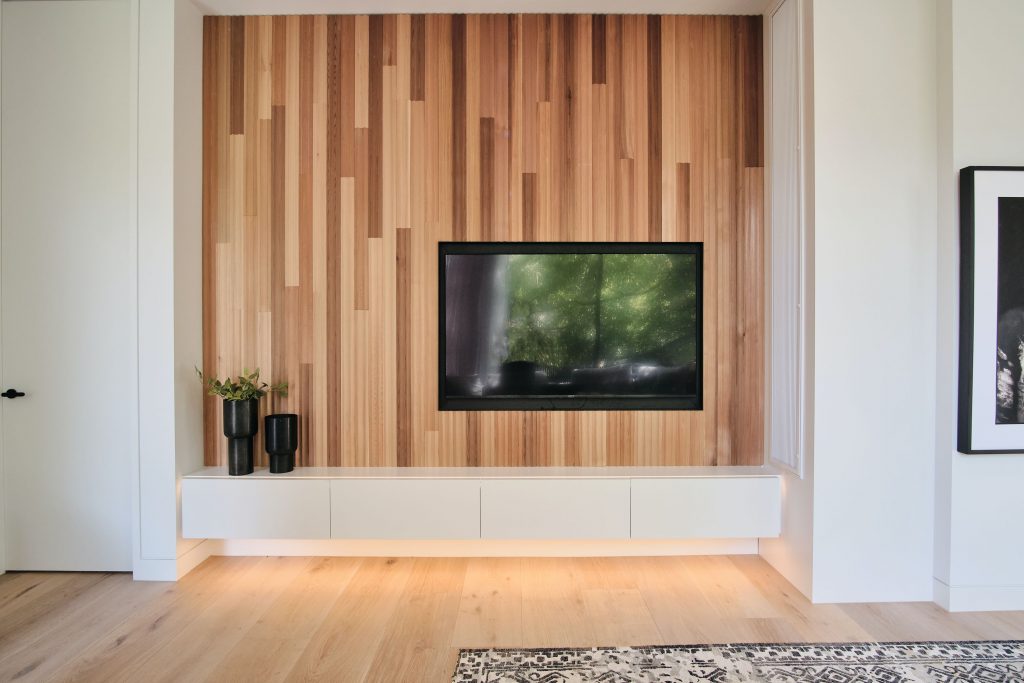
A full-height fluted timber wall brings texture and warmth to a room that paint or flat panelling just can’t replicate. It works particularly well in living areas, entryways, and bedrooms, where the wall is something you’re up close to and you can really see the surface quality.
You’ll need to decide which way you want the flutes to run. Vertical boards draw the eye upward and make a room feel taller. Horizontal boards make a wall feel wider and tend to suit lower-ceilinged or more intimate spaces. It’s a simple decision that can have a surprisingly big effect on how the finished room feels.
Cabinetry and Joinery
Fluted panels have become a popular way to lift the look of kitchen islands, bathroom vanities, and built-in cabinetry. Instead of flat cabinet doors, a fluted front gives the piece a handcrafted, considered quality. And when it ties in with a fluted feature wall in the same room, the whole space feels more cohesive.
Using fluted panels in this way photographs extremely well, which is probably part of why it’s spread so quickly through renovation inspiration content over the past few years.
Exterior Cladding
The fluted profile works just as well on the outside of a home as it does inside, as long as you’re using the right timber to suit the conditions.
On an exterior wall, the ridges catch sunlight and cast shifting shadows throughout the day, giving the facade a presence that changes from morning to evening. It’s particularly effective on front elevations and around entries where you want the building to make a visual impression.
For coastal homes or areas with a lot of moisture, species choice matters more. The same goes if your property is in a bushfire-prone area. For either situation, there are specific hardwood species in the Modinex range that are rated for outdoor use in those conditions, and it’s worth discussing with our team before committing to anything.
Ceilings
Fluted ceiling panels are one of the most underused applications and one of the most striking when done well.
In open-plan living areas or rooms with high or raked ceilings, the rhythmic pattern of the flutes adds a sense of scale and refinement overhead that most other ceiling finishes can’t achieve. It works well in residential spaces, but also in cafes, restaurants, and retail environments where the ceiling is part of the overall design statement.
Choosing the Right Timber Species
The timber species you choose affects how the finished panel looks, how it handles the conditions it’s in, and how much maintenance it’ll need down the track. Here’s a quick rundown of the main options in the Modinex Flute range:
– Western Red Cedar is lightweight, naturally resistant to moisture, and one of the more stable timbers available, meaning it’s less prone to swelling or shrinking with humidity changes. It’s a solid choice for both inside and outside.
– Blackbutt and Spotted Gum are tough Australian hardwoods that hold up well outdoors, including in bushfire-prone areas.
– Ironbark is one of the most durable timbers available and suits demanding outdoor conditions.
– Hemlock has a finer grain and lighter tone that suits contemporary interior spaces rather than outdoor use.
Not sure which one is right for your project? Requesting a sample is the best way to see the grain and colour in person before you decide.


How Light Works With the Flute Profile
One of the reasons fluted panels have become so popular is that they actively change with the light.
In a room with strong natural light, the curved ridges produce a continuous gradient of highlights and shadows that shifts through the day. In the morning, the shadows fall one way; by afternoon, the wall reads completely differently. It’s a quality that flat surfaces can’t replicate, and it’s the reason a fluted wall tends to be the most interesting surface in a room regardless of what else is going on around it.
If you’re working with a designer or lighting consultant, the profile also responds well to directional artificial lighting. A light angled across a fluted wall can produce a dramatic effect that works well in entryways and dining spaces.
Design Decisions Worth Getting Right
Which Direction to Run the Boards
Vertical is the more common choice and tends to feel more contemporary. It works well on feature walls, exterior facades, and entries. Horizontal has a more grounded quality that’s well suited to bedrooms, lower wall sections, and joinery applications where you want warmth without drama.
How Much Wall to Cover
The flute profile works best when it has room to establish a rhythm. On a large wall or full exterior elevation, the pattern builds a sense of scale. On a smaller wall, a single panel run is often enough to achieve the design intent, and going too far can make a smaller room feel busy. If you’re unsure, a sample on the actual wall you’re considering is a useful gut-check before committing.
Finishes
At Modinex, we apply finishes in the factory rather than on-site, which makes a real practical difference. The coating penetrates the timber more evenly, and the result lasts longer before it needs attention. Options range from clear coatings that let the natural grain show through to a range of colours if you want a more graphic or architectural result.


Design Decisions Worth Getting Right
The quality of a fluted panel is genuinely difficult to judge from a screen. What looks like a subtle difference between species or finishes in a photo can be quite obvious once you’re holding a sample.
If you’re considering fluted panels for a project, requesting samples is the most useful thing you can do before making any decisions. Our experts here at Modinex can also talk through species selection, finish options, and any site-specific requirements.
FAQs
Can fluted timber panels be used on the outside of a house?
Yes, with the right timber. Hardwood species like Blackbutt, Spotted Gum, and Ironbark from the Modinex range hold up well outdoors, including in many bushfire-prone areas.
What's the difference between fluted and channel cladding?
The main difference is the shape of the grooves. Channel cladding has square, flat-sided channels that produce sharp, defined shadow lines. Fluted panels have rounded, flowing ridges that produce softer shadows and a warmer overall feel. Channel suits a more graphic, architectural look; fluted tends to feel more organic and tactile.
How much maintenance do fluted timber panels need?
Inside, the occasional wipe-down is generally all that’s needed. Outside, it depends on the species and finish. Panels finished in our factory last significantly longer between maintenance rounds than panels coated on-site, because the factory process gets the coating into the flute channels more evenly and thoroughly. We can give you a realistic picture of what to expect for your specific installation.
Article By Joel Leitch | 11 November 2024

Joel Leitch
Project Consultant
Joel is an integral team member of NSW projects division with over a decade as a consultant to architects and builders. With extensive experience as a head of projects, Joel Leitch combines deep knowledge of natural timber, aluminium, and concrete to provide innovative and inspiring design solutions.
